Sunday, April 5, 2015

Works Cited

Works Cited
McCormick, Patricia. Sold. London: Walker, 2008. Print.
"The Universal Declaration of Human Rights, UDHR, Declaration of Human Rights, Human Rights Declaration, Human Rights Charter, The Un and Human Rights." UN News Center. UN, n.d. Web. 05 Apr. 2015

Various Images
http://www.bookfever.com/book_photos/42279.jpg
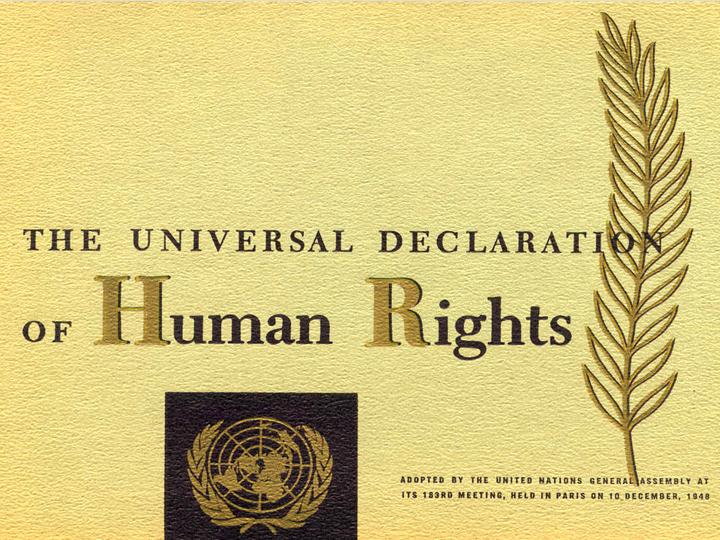
http://www.cicd-volunteerinafrica.org/images/subjects/TheUniversalDeclarationOfHumanRights.jpg
http://previews.123rf.com/images/bowie15/bowie151204/bowie15120400012/13037632-Young-woman-trapped-in-a-glass-jar-Stock-Photo.jpg

Saturday, April 4, 2015

Entry Six:

What actions are the characters taking to protect their own human rights? If they are not taking any action to protect their rights, why aren’t they?

One thing Lakshmi does to protect her families right is leave for the city. She believes that she is going to give them a better life, a life that they deserve. They need the money for their basic needs. She is also under the impression that she will be in a better situation in the city, as long as she respects her masters.

To protect her own rights, Lakshmi tries to stay true to who she is. She never forgets her Nepali heritage and always strives to pay off her debt and go home. She maintains this attitude even when things seem to be at their worst.

"'We all need to pretend,' she says. 'If we did not pretend, how would we live?'" (McCormick 144)

Lakshmi is not allowed to be who she was on the mountain, but when she arrived at the brothel she refused to do what Mumtaz said.

"Tonight when Mumtaz comes to my room , she sees that her strap has left raw sores on my back and neck, my arms and legs. So she hits me on the soles of my feet." (McCormick 110)

"'Now will you agree to be with men?' I shake my head. And so she says that she will starve me until I submit." (McCormick 111)

It is this fear, struck into Lakshmi, and the fear that Mumtaz will ever release her, that stops her from protecting her right to advocate for herself--as stated in the Universal Declaration of Human Rights.


"No one shall be held in slavery or servitude; slavery and the slave trade shall be prohibited in all their forms. Everyone has the right to freedom of opinion and expression; this right includes freedom to hold opinions without interference and to seek, receive and impart information and ideas through any media and regardless of frontiers." (UDHR)

Entry Five:


Do characters in the novel deserve the same human rights as you enjoy as a citizen of the United States? Why are they not given those rights? How are their rights being violated in the novel? Why aren’t those rights being protected?  

I believe the characters in this novel deserve to be given the same opportunities and rights as us in the United States. If they had been gifted the same things we are everyday, they may not have been in the situations they were in. Even Lakshmi's father fell into his gambling addiction because he lost the function of his arm and could no longer work. There was no help for him where they were. Mumtaz, though greedy, did not become a brothel owner for the fun of it. We never hear her back story.

The characters are not given these rights because of their circumstance. The country they are in is not as fortunate as ours. Circumstance can condemn.

The rights I believe all humans are entitled to were never present in the character's lives. Not everyone in the world has these rights. There are people who aren't protected. There is often no reason why they shouldn't be.

Article One of the Universal Declaration for human rights states this:

"All human beings are born free and equal in dignity and rights. They are endowed with reason and conscience and should act towards one another in a spirit of brotherhood." (UDHR Art. One)

Entry Four:

Does the point of view of the story enhance how the novel unfolds? How does the point of view add interest to the novel? Provide a specific quotation from the novel to demonstrate.

I found the point of view in this story interesting because not only did it give a descriptive narrative, it left out the unnecessary and long descriptive monologues out of the equation. I believe it did this successfully because poetry is descriptive yet abrupt.

Sometimes human rights novels can be long, grueling, and difficult to read. Though equally difficult to read, and painful to hear at times, Sold by Patricia McCormick tells the story beautifully, with the right flow of words.

Each short chapter is like a different poem, telling a different story, but they're all connected.

"When the David Beckham boy came home from school today, he threw his backpack in the corner, kissed his mother, played with his sister, and then sat down and taught me a few important things." (McCormick 164)

No muss, no fuss; just the information the reader needs to know.

Entry Three:

Describe the home life of one of the characters in the novel. How is their life different from yours? Provide specific examples.


The home life of Lakshmi is much different than mine.
    Lakshmi                                                             Me
Lakshmi’s family grows almost all of the food they eat. From rice patties to cucumbers, they grow everything they have to eat (minus the grain and the oil). When the rain comes and the paddies flood, they are put into more debt and left with no food.

“Finally, when I stand, my hands aching with emptiness, I see Gita’s family in the plot below ours. Gita’s father did not spend his afternoons in the tea shop: he spent his days building paddy walls that could stand up to the monsoon.” (McCormick 34)
Though we have a garden in our backyard, at my house we get food from the grocery store every week. We are fortunate enough that if we every need anything, there is a store that has it. There are seven gas stations/convenience stores in Oregon alone.
Lakshmi’s stepfather is addicted to gambling, which causes even more financial troubles for her family.

“Ama says we are lucky to have a man at all. She says I am to honor and praise him, respect and thank him for taking us in after my father died.” (McCormick 8)
My dad works from home everyday to earn us the money we need to pay for our house and our clothes and our food.

He is home when I come home everyday and for that I am very blessed and grateful.
Lakshmi has a little brother. He is only a baby but there is very little chance he will live a whole year. This is a fact of life for her.

“Four other babies were born between me and my brother.” (McCormick 12)
I also have a little brother. Despite a broken thumb he is healthy and well. When he broke his thumb we simply drove him to the doctor and they gave us a way to fix it up.


Entry Two:

Who does not have power in the novel? What evidence is present of this lack of power? Provide specific examples?  

I believe there are three different ways to have power over someone, mentally, emotionally and physically. In this novel Lakshmi's elders and "owners" have physical power over her. She can not physically leave.

"'Leaving,' I say. 'I'm going home.'

Mumtaz laughs. 'Home?' she says. 'And how would you get there?'
I don't know.

'Do you know the way home?' she says.

'Do you have money for the train? Do you speak the language here? Do you even have any idea where you are?'"
(McCormick 105)


Lakshmi has mental power at the beginning of the novel but as her desperation to get home grows, she starts to do more and more of what Mumtaz asks. She loses her will to be who she is. Her constant reminders of her name and her age seem to disapear.

"'Lakshmi,' I say to myself. 'My name is Lakshmi.'" (McCormick 200)

Lakshmi, who once looked forward to the day she could return to her mother and her mountain, lets fear control her, giving Mumtaz and the brothel the power.

"'I am afraid. Afraid that Mumtaz will beat us senseless. And I am afraid that the Americans will shame us and abandon us in the streets. But most of all, I am afraid to imagine a life outside this place." (McCormick 208)

The person who has power in this novel changes. Mumtaz and the brothel have physical power over everyone. Though Lakshmi is tried mentally and emotionally, for the majority of the book she has the power in those areas, which how she keeps up her hope for escape.


Thursday, April 2, 2015

Entry One:


When reading this novel, how are you reminded of your own human rights as a citizen of the United States? Do you feel you deserve those human rights? How are they protected?  


Often, seeing people who aren't as fortunate as us reminds us how blessed we are. This is the case in Sold by Patricia McCormick. Lakshmi starts her life in a place where no one has what they need. It is a constant struggle from dry season to monsoon season. Her family is unstable and most income they receive has to be collected to pay their debts or Lakshmi's stepfather gambles it away. The terrible conditions make it very difficult for a child to survive to adulthood.

"According to the number of notches in Ama's wedding trunk, she is thirty-one and I am thirteen.If my baby brother lives through the festival season, Ama will carve a notch for him. Four other babies were born between me and my brother. There are no notches for them."

One way I am reminded of my rights in the united states is the opportunity I have to attend school and get a good, well-rounded education. Lakshmi is fortunate that she gets to attend school but her school is not as good as ours is. She has one teacher and one pencil, and she even loses that:

"That the first thing we must do is pay the landlord. And Gita's uncle who sold us last season's seed. And the headman's wife, who would not trade cooking oil for work. And my teacher, who gave me her pencil when she saw I had none."

Another way my rights as an United States citizen are clear is my access to food and shelter. Although many--even in the U.S.-- do not have this gift, the majority do, and it is one of the things we all take for granted.

U.S. citizens also have access to health care and even if they don't have insurance, there are free clinics and government provided funds to pay for their medical care. The people of Lakshmi's village never have access to this kind of medical care. The only way they can help themselves or their children is to get them to the doctor across the river, which is difficult. This greatly lowers the survival rate to adulthood.

" On the mountain we mark time by women’s work and women’s woes...

This is the season when the women bury the children who die of fever...

This is the season when they bury the children who die from the coughing disease...

This is the season when they bury the children who cannot be carried to the doctor on the other side of that river...

They teach the children who have survived the seasons to make back-to-school ink from the blue-black juice of the marking nut tree...


This is also the season when the women drink the blue-black juice of the marking nut tree
to do away with the babies in their wombs—the ones who would be born only to be buried next season..."

I believe I deserve these rights as a human because it is my opinion that all people who have not committed a crime against humanity deserve them. Once you have taken away the basic human rights of another person, you forfeit those rights for yourself.

The rights of United States citizens were first defined in the Declaration of Independence and the U.S. Constitution. It is those documents, as well as the Universal Declaration of Human Rights that fuel our country's continuing mission to protect and defend these rights. We not only defend the rights of our own citizens, but the rights of people all over the world who are not being treated justly and fairly. I believe in basic human rights for everyone, which is why I think the most important thing for the U.S. to do as a country is defend those for ourselves and other people. If we use our resources wisely we can do great things.